Why crude oil matters
Crude oil is the most widely traded commodity in the world and sits underneath much of the global economy. It is refined into petrol, diesel and jet fuel, it is the feedstock for plastics, fertilisers and chemicals, and in many countries it is still a significant source of electricity. The world uses on the order of one hundred million barrels every day, and that demand is spread across almost every industry.
Because supply and demand are both slow to change, but demand for the final product is urgent, small imbalances produce large price moves. That is the opportunity in oil, and it is also the danger. A change of a few percent in the volume available can move the price by far more.
For an investor, oil offers something that shares and bonds do not: direct exposure to a physical commodity whose price is set by global supply, demand and politics rather than by a single company's earnings.
Brent and WTI explained
There is no single "price of oil". Crude comes in many grades, so the market uses benchmarks. Brent, a blend produced in the North Sea, prices roughly two-thirds of the world's traded crude and is the reference for seaborne oil moving through Europe, Africa and Asia. West Texas Intermediate, or WTI, is the US benchmark, delivered inland at Cushing, Oklahoma, and reflects American supply conditions.
The two usually trade within a few dollars of each other, but the gap changes with transport costs, US export capacity, refinery demand and inventories. Part of the skill in managing oil exposure is deciding how much of each to hold and when the spread between them is unusually wide or narrow.
How we gain exposure
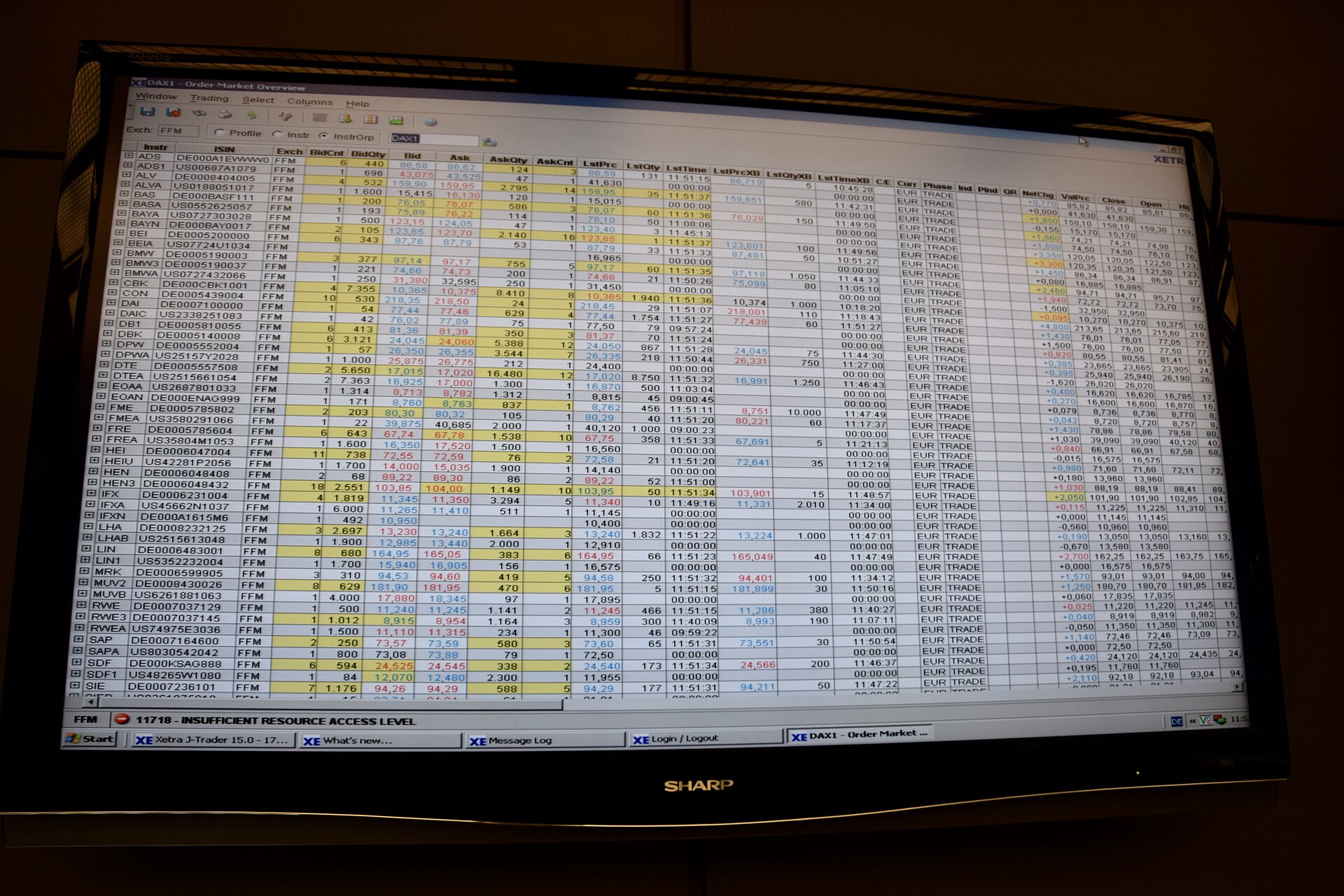
Positions are taken mainly through exchange-traded futures, which are standardised contracts to buy or sell oil at a set price on a future date. We never intend to take delivery. Contracts are closed or rolled into a later month before they expire, so you hold a financial position, not barrels.
Futures are traded on regulated exchanges with daily settlement, which means gains and losses are realised every day and there is no hidden counterparty risk from a private dealer. They also require margin, which is why position sizes are set conservatively.
The allocation can include listed energy companies — producers, refiners and oilfield-service firms — and options used to limit downside. These behave differently from futures and add their own company-specific risks.
The futures curve: backwardation and contango
A futures contract for next month and one for next year usually trade at different prices. When later contracts are cheaper than near ones the market is in backwardation, usually a sign of tight supply. When later contracts are more expensive it is in contango, usually a sign of oversupply and storage filling up.
This matters because holding a position over time means repeatedly selling the expiring contract and buying the next one. In backwardation this "roll" tends to add to returns; in contango it tends to subtract, sometimes substantially, even when the headline oil price does not move. This is why an oil fund can lose money in a year when oil is flat.
Managing the roll — choosing which contract month to hold, and when to switch — is one of the most active parts of this service.
What moves the oil price
Oil responds to a mix of slow structural forces and fast events. The slow forces are the growth of the global economy, the pace of electrification, efficiency gains and long-term investment in new fields. The fast ones are production decisions by the OPEC+ group, unplanned outages, weather, shipping disruptions, sanctions and war.
Weekly inventory reports from the US Energy Information Administration are watched closely: an unexpected build in stocks tends to push prices down, and an unexpected draw tends to push them up. Currency also matters, since oil is priced in dollars; a stronger dollar makes oil dearer for most of the world and tends to weigh on demand and price.
How we manage risk
Oil can move five percent in a day and has moved far more in a crisis. Every position therefore has a defined maximum loss, positions are capped relative to the pool, and exposure is cut when volatility rises. Options can be used to put a floor under losses in exchange for paying a premium.
Even so, there are events no stop can handle. If oil gaps sharply overnight on a geopolitical shock, orders fill at the next available price, not at the level you wanted. In April 2020, one benchmark contract briefly traded below zero. Risk control reduces the damage from these events but cannot remove it.
What it covers
Brent futures
The global seaborne benchmark. Our main instrument for international supply and demand, traded on ICE.
WTI futures
The US inland benchmark, traded on CME. Sensitive to American production, inventories and export capacity.
Calendar spreads
Positions that profit from a change in the shape of the futures curve rather than the direction of price. Used selectively.
Options overlay
Purchased options that limit downside on a position. They cost a premium, which reduces returns if oil does not fall.
Listed producers
Shares in exploration and production companies. They tend to move with oil but are also affected by costs, debt, management and dividends.
Refiners and services
Refiners earn the margin between crude and products; service firms depend on drilling activity. Each responds to oil prices differently from the commodity itself.
What drives the outcome
- OPEC+ production decisions and the compliance of member countries.
- Weekly inventory data from the US Energy Information Administration and the American Petroleum Institute.
- Global demand: manufacturing activity, aviation and the growth outlook for China, India and the US.
- Geopolitical events affecting shipping lanes and producing regions.
- The US dollar — oil is priced in dollars, so a stronger dollar tends to weigh on prices.
Who it is for
- Investors who want commodity exposure that is not tied to a single company's results.
- Those who understand that oil is cyclical and event-driven, with long flat or losing stretches.
- People wanting a hedge against energy-driven inflation inside a wider portfolio.
- Not suitable for anyone who cannot tolerate sharp, fast losses or who needs capital back at short notice.
How the process works in practice
- Benchmark exposureCapital is allocated across Brent and WTI futures. Which benchmark carries more weight depends on the spread between them and on liquidity.
- Curve managementFutures prices differ by delivery month. Contracts are rolled along the curve, and the shape of that curve — backwardation or contango — adds to or subtracts from the result.
- Equity sleevePart of the allocation can be held in listed producers, refiners and oilfield-service firms, which respond to oil prices with a different profile to futures.
- Risk limitsPosition size is capped, and stops are applied so an adverse move in a volatile market is bounded.
Your journey as an investor
- Day 0Account verified and funded. Your deposit is allocated to the next scheduled position-building window.
- Month 1First report: exposure by benchmark, contract months held, roll costs and results.
- Roll datesContracts are rolled ahead of expiry. Roll costs or gains are shown on your statement.
- End of holdMinimum holding period ends. Withdrawals are settled after positions are closed.
Questions investors ask
Do I take delivery of oil?
No. Positions are financial futures that are closed or rolled before delivery. You never receive physical barrels.
Why are returns uneven?
Oil is cyclical and event-driven. Expect long flat or losing stretches broken by sharp moves in either direction.
Can I add to a position later?
Yes. Additional deposits are allocated on the terms in force at the time of the top-up.
Why can I lose money when the oil price is flat?
Because of contango. If later-dated contracts cost more than expiring ones, each roll locks in a small loss. Over many months this can add up to a meaningful drag.
Do you use leverage?
Futures are inherently leveraged because only margin is posted. Positions are sized so that total exposure remains within limits set for the pool, and leverage is lower than what an individual trader could take.
What if there is a war or supply shock?
Prices can jump in either direction within minutes. Stops may fill beyond their level. Expect volatility to rise sharply and positions to be reduced.
Is oil a good inflation hedge?
Often, because energy costs feed into prices of other goods. But the link is not reliable in every period, and oil can fall while inflation rises.
How is the long-term energy transition relevant?
Electrification and efficiency are expected to slow oil demand growth over time, and may reduce it. This is a structural headwind, which is why this service is managed actively rather than held passively for decades.
Glossary
- Backwardation
- A market state where later-dated futures cost less than near-dated ones.
- Contango
- The opposite: later-dated futures cost more than near-dated ones.
- Roll
- Closing an expiring futures contract and opening a later one to maintain a position.
- OPEC+
- The group of major oil producers, including OPEC members and allies such as Russia, which coordinates output decisions.
- Margin
- The deposit required to hold a futures position. It is a fraction of the contract's value.