Why gold has endured
Gold has been used as money and as a store of value for thousands of years. It does not corrode, it cannot be created at will, it is accepted everywhere and it is no one else's liability: unlike a bond or a bank deposit, its value does not depend on a borrower keeping a promise. These properties are why central banks still hold it and why investors turn to it in uncertain times.
Gold does not pay interest and produces no income. Its entire return comes from the change in its price. That makes it unusual, and it is why gold tends to be bought for what it protects against rather than for what it earns.
What gold does in a portfolio
Gold has three jobs. The first is as a hedge against inflation and currency weakness: when the purchasing power of money falls, gold has often risen. The second is as a safe haven in a crisis: when stocks fall sharply and investors look for safety, gold has frequently held its value or risen, though not every time. The third is diversification: its price movements have a low correlation with those of stocks and bonds, so a modest allocation can smooth the overall ride.
It is not a guaranteed protector. Gold fell for several years after its 2011 peak, and in the early 1980s it took decades to recover its previous high. It can disappoint, especially when real interest rates rise and the dollar strengthens.
Three ways to hold gold with us
Investors differ in how they want to own gold, so the service offers three forms. You can combine them.
Allocated physical bullion
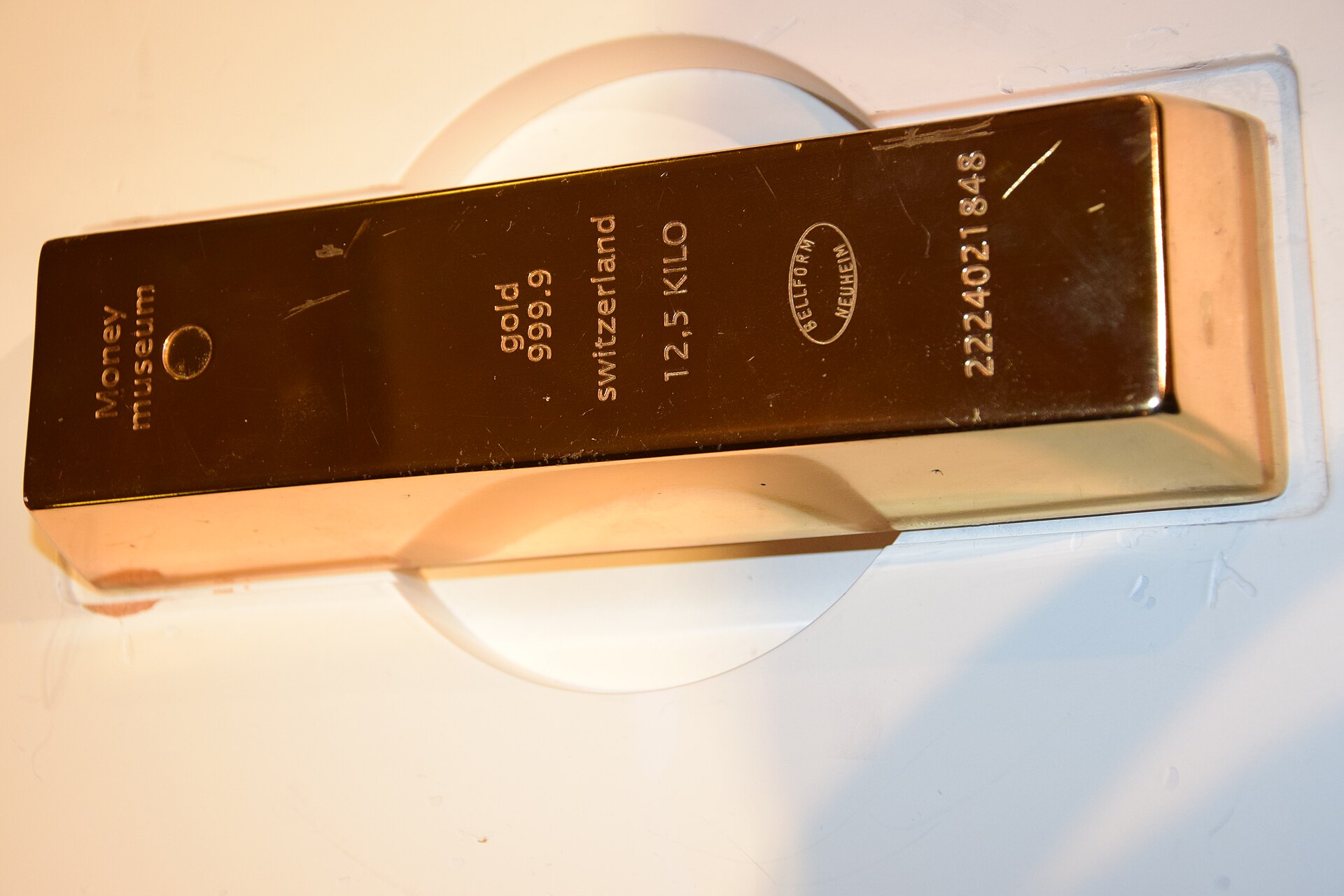
This is the closest thing to owning gold itself. Bars are bought from accredited refiners, stored in an insured vault and recorded against your holding. "Allocated" means specific bars are set aside for the pool and are not lent out or used for other purposes. Vaults are audited, and holdings are checked against the records.
Storage and insurance carry a cost, which is disclosed and reduces returns slightly. Larger holders can arrange to hold named bars in segregated storage and, subject to fees and minimum sizes, request delivery.
Gold futures
Exchange-traded gold futures give exposure to the gold price without handling metal. They are efficient, liquid and cheap to trade, and are used to adjust exposure quickly. Like all futures they are rolled before expiry, and they require margin, so position sizes are limited.
Gold mining equities
Mining companies dig and sell gold, so their profits tend to rise faster than the gold price. If gold rises by ten percent, a producer with fixed costs may see profits rise by far more. The reverse applies on the way down. Miners also carry risks bullion does not: rising costs, mine accidents, political interference, debt and management mistakes.
Because of this leverage, mining equities are a smaller sleeve and are a capped part of the allocation.
What moves the gold price
The main influence is real interest rates, which are interest rates minus inflation. When real yields fall, the cost of holding a non-yielding asset drops and gold tends to rise. The US dollar is the second: gold is priced in dollars, so a weaker dollar tends to lift it.
Official buying also matters. Central banks have been net buyers in recent years, diversifying reserves, and their demand is long-term and price-insensitive. Jewellery demand, particularly in India and China, adds a large and seasonal component, and investment flows into exchange-traded funds and bars can amplify moves. Geopolitical tension tends to bring safe-haven buying.
How we manage the holding
Holdings are valued daily at the spot price and shown on your statement. Bullion and futures are rebalanced to keep the mix aligned with the target allocation. Counterparties — refiners, vault operators, brokers — are vetted and diversified. Vault inventories are independently audited.
What it covers
Allocated bars
Large LBMA-standard bars, typically 400 troy ounces, held in secure vaults and recorded against holders.
Small bars and coins
Smaller, more liquid formats used for fractional holdings. Premiums over spot are higher, which is reflected in costs.
COMEX gold futures
Liquid exchange-traded contracts for price exposure and quick adjustment. Subject to roll costs.
Major miners
Large, established producers with diversified mines and lower risk than small companies.
Royalty and streaming companies
Companies that finance mines in return for a share of output. Lower costs and risk than operators, with gold exposure.
Silver and platinum
Occasionally used as a minor diversifier on request. More volatile than gold and with greater industrial demand.
What drives the outcome
- Real interest rates — gold tends to rise when inflation-adjusted yields fall.
- The US dollar, in which gold is priced, which typically moves in the opposite direction.
- Central-bank buying and the level of official reserves.
- Safe-haven demand during geopolitical or financial stress.
- Jewellery and industrial demand, particularly in India and China.
Who it is for
- Investors seeking a store of value outside the banking system and a hedge against inflation and currency weakness.
- Those who want a stabiliser for a portfolio heavy in stocks or property.
- People comfortable with an asset that produces no income.
- Not suitable as a sole investment or for anyone needing predictable income.
How the process works in practice
- Physical bullionBars are purchased from accredited refiners, stored in an insured, audited vault, and recorded against your holding. Storage and insurance costs are disclosed.
- Futures exposureExchange-traded gold futures give price exposure without handling metal, and are rolled before expiry.
- Mining equitiesA sleeve of established gold producers adds exposure to the gold price magnified by operating leverage, along with company-specific risk.
- ValuationHoldings are marked daily to the spot price, so your statement reflects the market value of what you hold.
Your journey as an investor
- Day 0Funding settles. Your allocation is purchased at the next pricing point.
- DailyHoldings are marked to the spot price and visible on your dashboard.
- QuarterlyStatement showing holdings, vault confirmation and costs.
- ExitPositions are sold at spot less costs, or delivered by arrangement.
Questions investors ask
Is my gold physically held?
Under bullion exposure, yes — allocated and recorded against your holding. Futures and mining equities do not involve physical metal.
Can I take delivery?
Delivery may be arranged on request, subject to fees and minimum bar sizes.
Is gold safe?
It is a more stable store of value than most assets over long periods, but it is not risk-free and its price can fall.
Can gold really fall?
Yes. Gold fell about 45 percent between 2011 and 2015. It is often steadier than stocks but it is not risk-free.
What does allocated mean?
It means identified bars are held for you or the pool and are not lent out or used as the provider's own assets.
What are the costs?
A storage and insurance charge on bullion, brokerage and roll costs on futures, and a management fee. All are disclosed up front.
How much gold should be in a portfolio?
There is no single answer. Many advisers suggest a modest share, often in the range of five to ten percent, but that depends on your circumstances. We do not give personal advice.
Can I add to my gold later?
Yes. Additional deposits are allocated at the prevailing price.
Glossary
- Troy ounce
- The unit used for precious metals, equal to about 31.1 grams.
- LBMA
- The London Bullion Market Association, which sets standards for good delivery bars.
- Spot price
- The current market price for immediate delivery.
- Real interest rate
- The interest rate after subtracting inflation.
- Safe haven
- An asset expected to hold or gain value during market stress.